Drawings/Blueprints/Commercial Projects
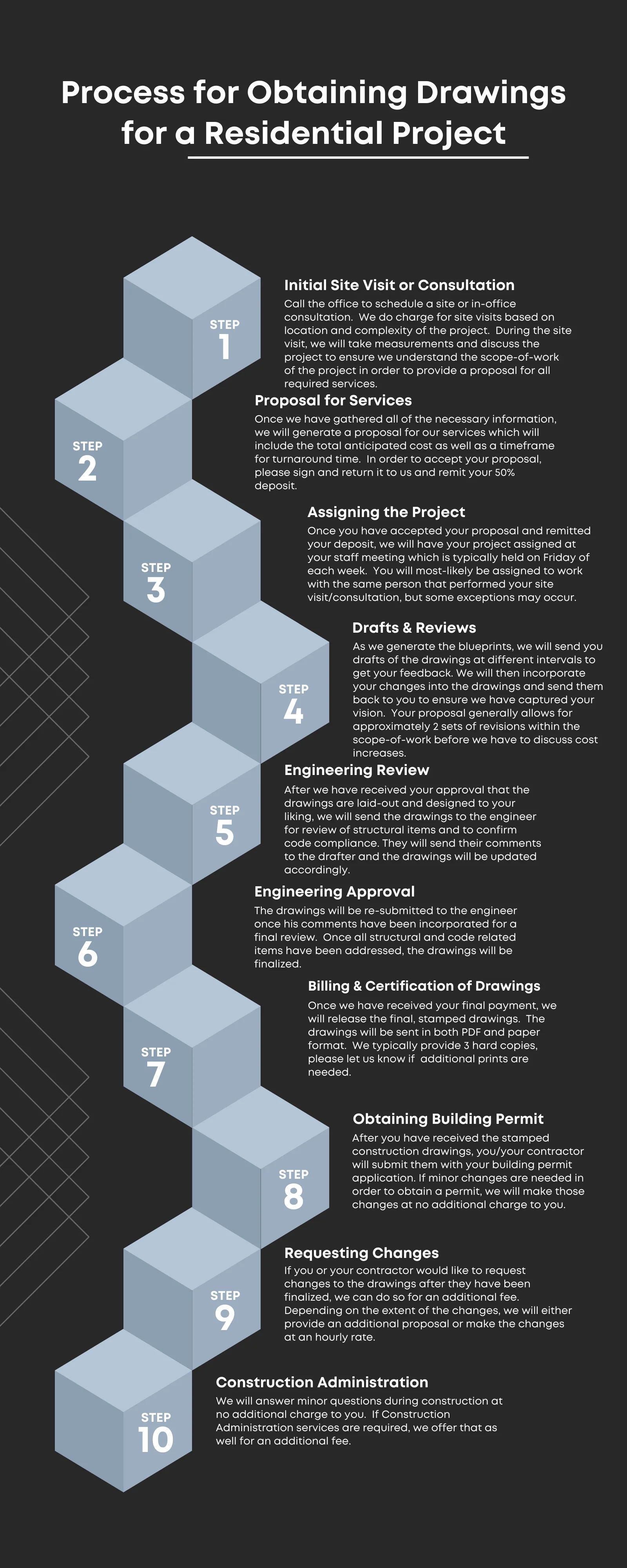
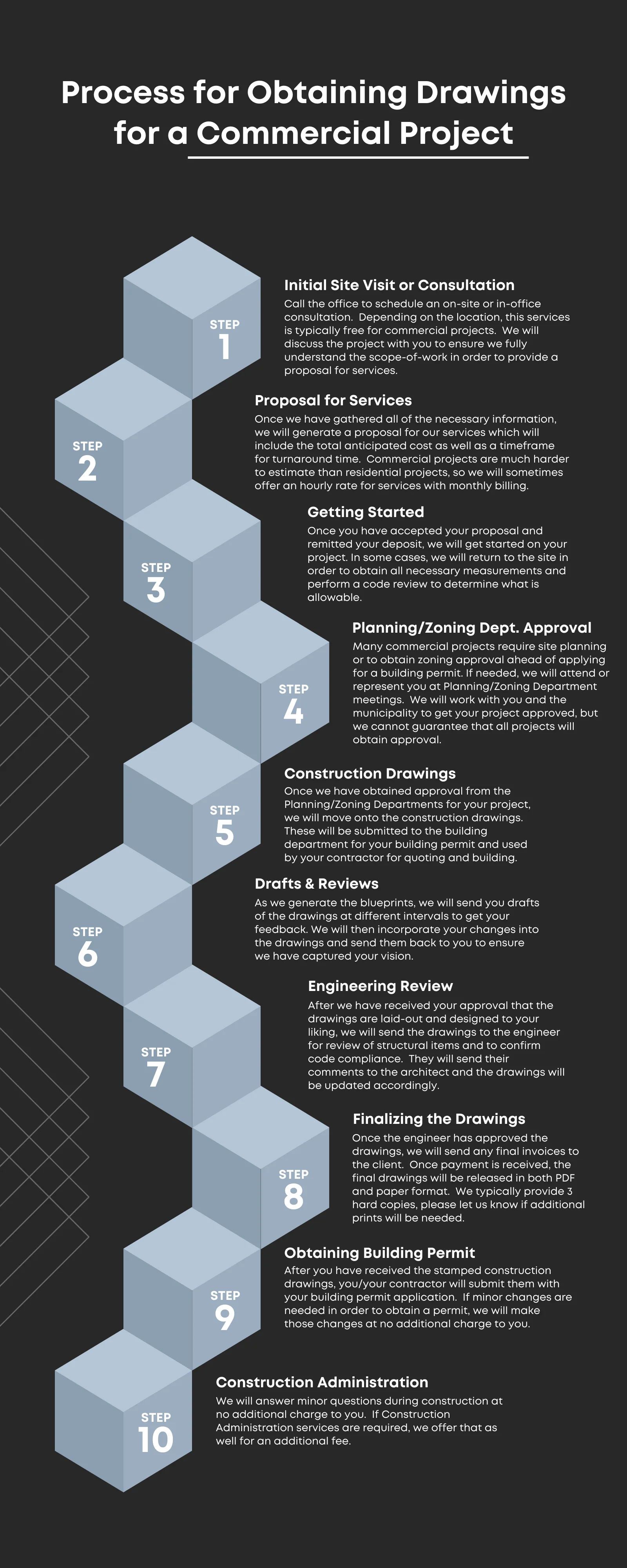
Q. Do you charge for site visits?
A. Yes, the fee is based on location and anticipated time on site.
Q. Do you deduct the site visit fee from the drawing fee?
A. No, the fee for the site visit is separate from the fee/cost for the drawings.
Q. How do you determine the cost of the drawings? Is it based on square footage?
A. No, our drawing costs are not based on the square footage. We will perform a site visit to determine the size and complexity of the drawings and calculate how many hours it will take in order to produce the drawings. Then, we multiply that by our hourly rates.
Q. What are your hourly rates?
A. Our rates are subject to change, but as of 1/1/2025 our rates are as follows:
Standard Drafting - $85/hr
Architectural Drafting - $120/hr
Engineering/Inspections - $175/hr
Administrative - $75/hr
Site Visit Fee Starting at $350
Q. What is the difference between a drafter/designer and an architect?
A. The main difference is the amount of education obtained. An architect has obtained an architecture degree and then applies to be registered or licensed. A drafter/designer does not have a specific degree path, but at Nolan Engineering, our drafters/designers are qualified to assist with the design process and can offer suggestions that will make your space more visually appealing, functional, cost-effective, or easier to build. In most cases, our architects work on commercial projects, whereas drafters/designers specialize in residential work.
Q. What forms of payment do you accept?
A. We accept cash, checks and credit/debit cards, including Discover and American Express.
Q. Do you take payment over the phone?
A. No, we do not accept payments over the phone due to the increased risk of fraud and errors.
Q. Once I have made my deposit, how long will it take to receive my drawings?
A. It depends on the complexity of the drawings, our workload, and your responsiveness.
Q. Once my blueprints are finalized, do you also do the construction/contract work?
A. No, we only provide architectural/engineering services, but we do have a list of recommended contractors that we can provide.
Q. If my drawings have been finalized and we need additional changes, how does that work?
A. If the requested changes are minor changes required by the building department in order to obtain your building permit, we will make those changes at no additional charge to you. If the requested changes are major changes required by the building department in order to obtain your building permit, we will work with you and do what we can in order to help you obtain your building permit. If the requested changes are something that is requested by you or your builder, we will either provide a proposal for the changes or charge an hourly rate, depending on the complexity of the changes.
Q. If my contractor has questions during construction, can he contact you?
A. Yes, we will answer questions to assist with construction, but depending on the extent of the questions, we do charge for construction administration.
Q. Do you submit the building permit application to the building department?
A. No, that would be done either by you or your contractor, as the building department is going to request insurance information from the contractor, construction costs, etc.
Septic Design FAQs
How does soil testing for septic systems work?
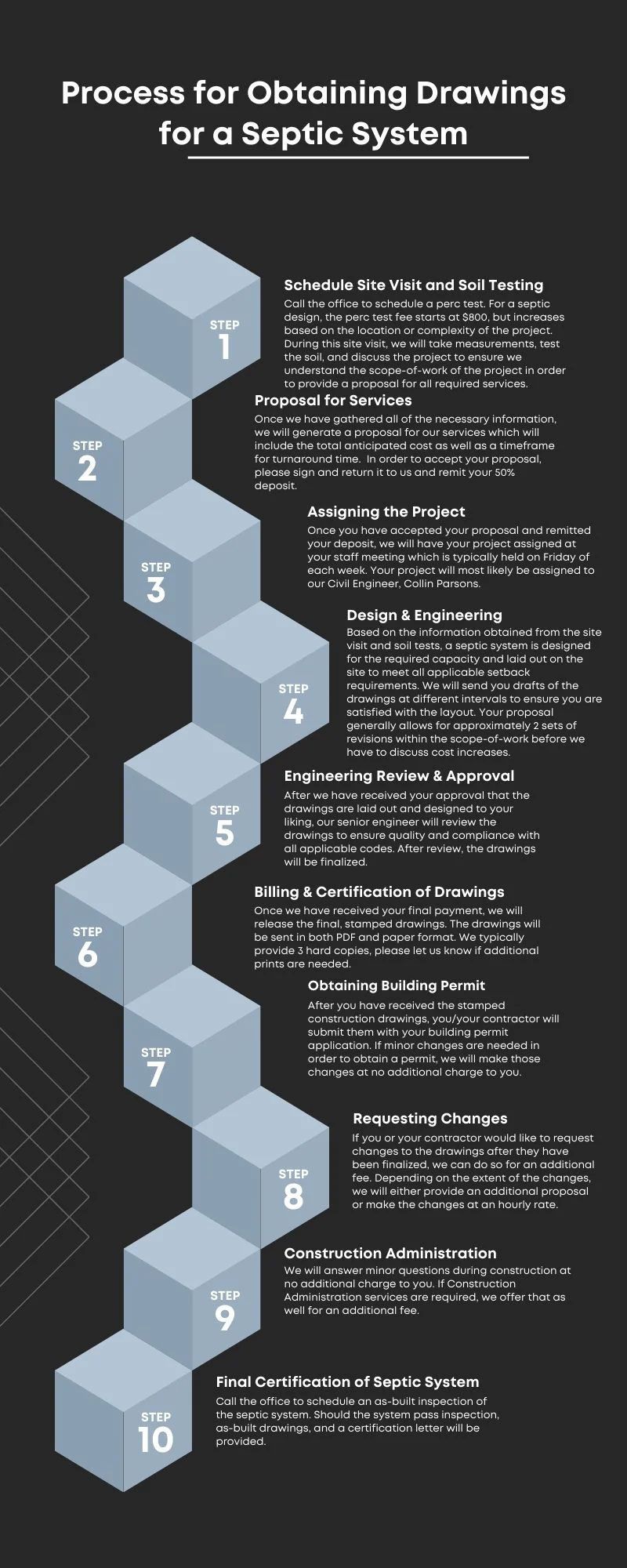
There are two parts to soil testing for a septic system. A deep pit test is performed to determine any boundary conditions, such as groundwater, bedrock, or an impermeable surface. A percolation test is performed to determine the percolation rate of the soil. This, combined with the daily water usage, is used to determine the required capacity of the septic system. During this site visit, measurements will be obtained to ensure that the septic system can fit on the site and meet all applicable setback requirements.
A backhoe or excavator is necessary to perform the deep pit test. It is the responsibility of the client to arrange for a machine and operator to be on site for the test. Either the client will hire a contractor to bring and operate the machine, or the client will rent a machine and operate it themselves.
For sites located in Albany, Columbia, Rensselaer, Schenectady, or Ulster counties, a county representative must be on site to witness the tests. This requires that an application form and fee be submitted to the county. Please find the form for your county on this page. We can assist in filling out the form and scheduling the appointment with the county.
If there is a water source on site, such as a hose bib, please ensure that it is usable for the test. If water is not available on-site, please notify the office.
What if I already had the necessary soil testing performed?
Please let us know, and provide the results so we can review them to determine if any additional testing is required. If additional testing is not required, then we may still need to perform a site visit to take measurements.
Do you deduct the site visit fee from the drawing fee?
No, the fee for the site visit is separate from the fee/cost for the drawings.
How do you determine the cost of the drawings?
The fee for design of a septic system is determined by the type of system required (conventional or non-conventional), and/or the size and complexity of the site and system.
Hourly Rates:
Our rates are subject to change, but as of 1/1/2025 our rates are as follows:
Standard Drafting - $85/hr
Architectural Drafting - $120/hr
Engineering/Inspections - $175/hr
Administrative - $75/hr
Perc test fee is $800
What forms of payment do you accept?
We accept cash, checks and credit/debit cards, including Discover and American Express.
Do you take payment over the phone?
No, we do not accept payments over the phone due to the increased risk of fraud and errors.
Once I have made my deposit, how long will it take to receive my drawings?
It depends on the complexity of the drawings, our workload, and your responsiveness.
For non-conventional systems, is a percolation test required on the fill once it is placed?
Percolation testing of fill is required in some towns or counties, and we recommend it in areas where it is not required. Please call the office to schedule.
What is an as-built inspection?
An as-built inspection is performed to certify that the system was installed in accordance with the issued construction drawings and all applicable codes. Upon substantial completion of the system, but prior to backfilling, call the office to schedule the inspection.
For systems installed in counties that require a county representative to witness the initial percolation test, typically, they will also witness the as-built inspection.
All tank lids and distribution boxes must be visible. All 4 corners of the absorption field, as well as one complete lateral, must also be visible. All system components will be inspected to ensure quality and compliance with the issued construction drawings and all applicable codes.
Triangulated measurements of all system components will be obtained.
Should the system pass inspection, as-built drawings and a certification letter will be provided.
Assessment & Report FAQs
Septic Design Resources
Q. How long does a structural assessment take?
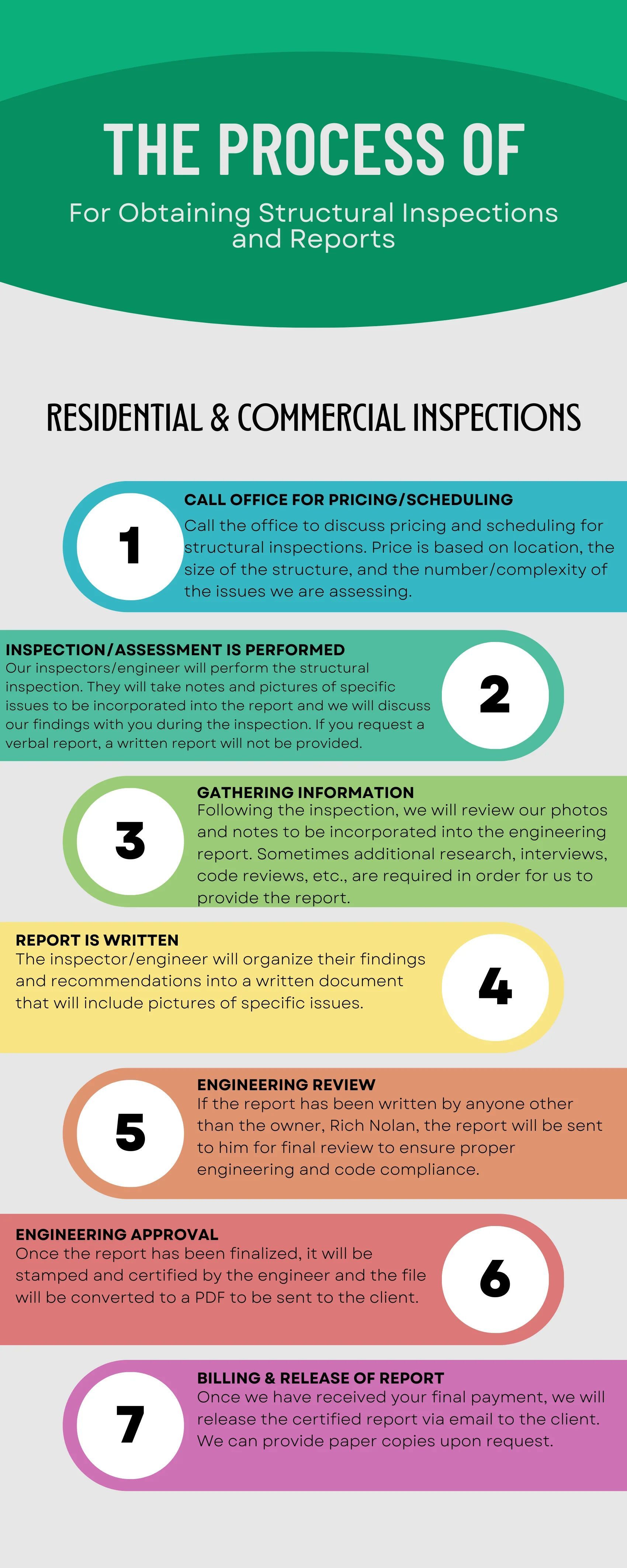
A. It depends on the extent and complexity of the issue. Some inspections only take 15 minutes, whereas others can take all day.
Q. Is the report certified?
A. Yes, the report is stamped and certified by a licensed, professional engineer.
Q. What is the difference between a verbal and a written report?
A. A written report is a certified engineering report that includes the engineer’s findings, recommendations for repair, and pictures of specific issues. A verbal report will also include the engineer’s findings and recommendations for repair, but we will provide our report to you verbally. Therefore, it will not be certified. We sometimes provide verbal reports in order to provide a proposal for repair drawings or to provide peace of mind to the homeowner.
Q. What areas do you service?
A. We will service just about any part of NYS. However, we do charge for travel, and depending on your location and the structural concern, it may be more cost-effective to seek out services in your local area.